The best time to visit Tambopata is May to October, when trails are drier and rain rarely cuts a boat ride short. That is only half the answer, though, and it is why the top results online disagree: some say November to June, others April to November.
We plan Amazon add-ons to Peru trips from Lima. Below you have the rain month by month, what you trade in each season, when macaws are busiest at the clay licks, what changes in 2027 with El Niño, and which of our three Tambopata trips fits your dates.
Quick answer
- Driest: June to August, with 55 to 65 mm of rain and 6 to 8 rainy days a month in Puerto Maldonado (1991–2020 averages).
- Wettest: January and February, about 335 to 345 mm and 18 rainy days each. In the wet season it usually rains in the afternoon.
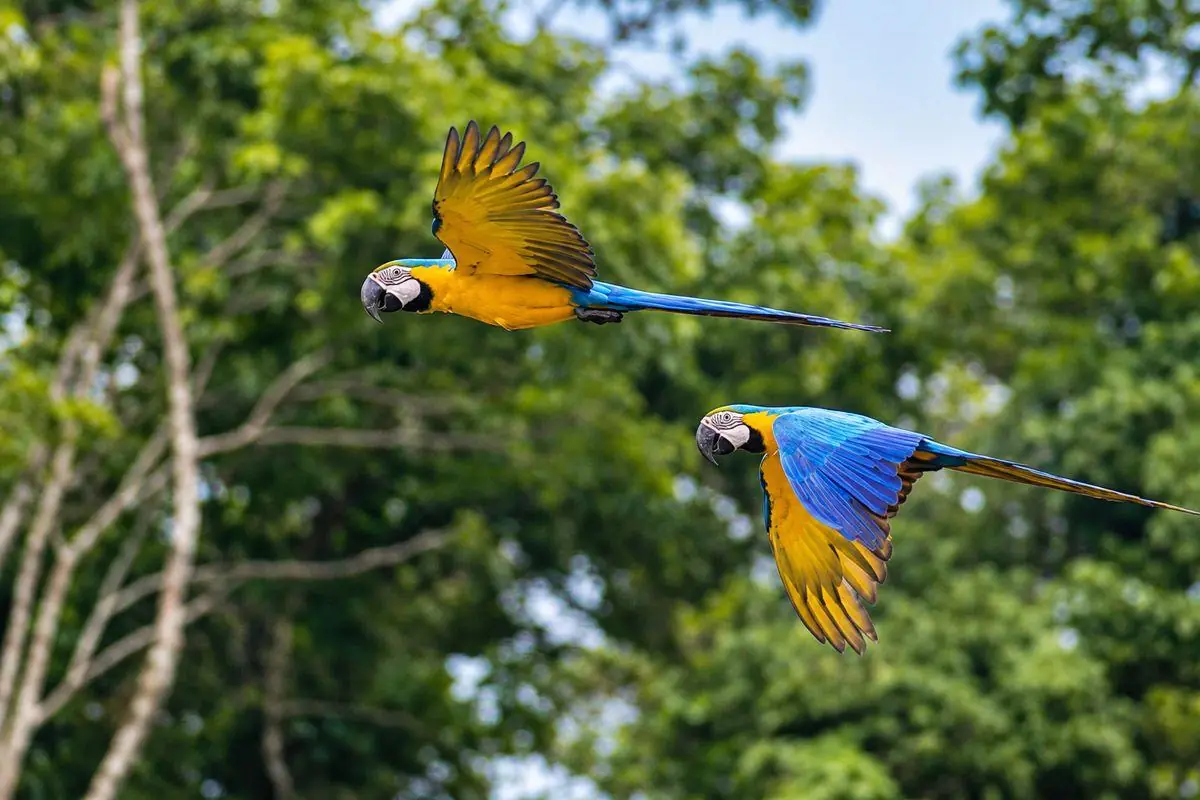
- Macaws: clay lick activity peaks September to January and is lowest April to June, according to research at the Tambopata Research Center.
- Pack a fleece from May to September: cold fronts called friaje can push nights down to 10 to 12 °C, and lower in strong ones.
- 2027: Senamhi expects normal to below-normal rain in the Amazon for January to March, the opposite of Peru’s coast.
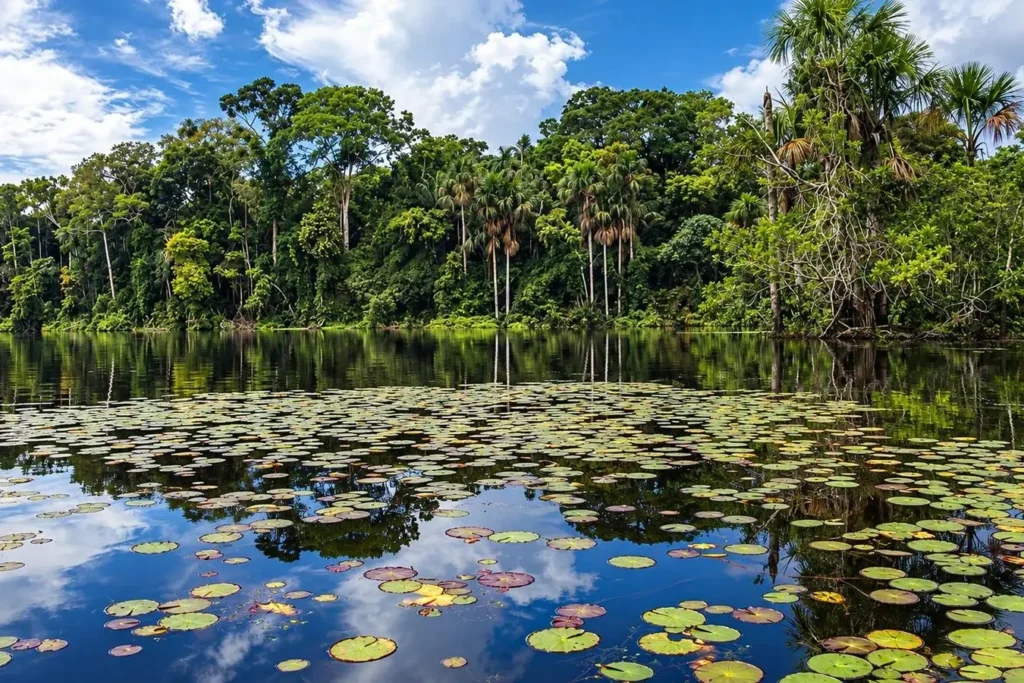
For most travelers, the best time to visit Tambopata is the dry season, May to October, and especially June to August, when it rains on only 6 to 8 days a month. Those are also the dry months in Cusco and Machu Picchu, so one trip works well for both. From November to April Tambopata still runs, with more rain, more fruit in the forest and fewer visitors.
Sources disagree because they are measuring different things. The lodges that praise the rainy season are talking about fruiting trees, frogs and macaw nesting. The ones that pick the dry season are talking about trails, boat rides and comfort. Both are right. What changes is what you want from three or four days in the forest.
Tambopata weather month by month
Puerto Maldonado, the gateway town for Tambopata, gets about 2,165 mm of rain a year, and about two thirds of it falls between November and March. Temperature barely moves: average highs stay between 29 and 33 °C all year. The real variable is rain, so that is what this table is about.
| Month | Rain (rainy days) | What it means for your trip |
|---|---|---|
| January | 345 mm (18) | Wettest month. Muddy trails, high rivers. No camping trip. |
| February | 335 mm (18) | As wet as January, a little cooler. |
| March | 275 mm (17) | Still rainy, forest at its greenest. |
| April | 155 mm (13) | Rain easing. The camping trip season starts. |
| May | 105 mm (12) | Dry season begins. First cold fronts possible. |
| June | 60 mm (8) | Dry. Cold nights possible; lowest macaw activity. |
| July | 55 mm (6) | Driest month, and peak season in the Andes too. |
| August | 65 mm (6) | Dry and getting hotter. |
| September | 100 mm (9) | Hot. Macaw activity picks up. |
| October | 165 mm (13) | Hottest stretch. Rain is back, about as wet as April. |
| November | 235 mm (15) | Rainy season starts. Last month for camping. |
| December | 280 mm (17) | Rainy, macaws still busy. |
Puerto Maldonado climate normals, 1991–2020, as compiled by Climates to Travel. The camping trip is our Amazon Expedition (see below).
Dry season vs rainy season: what do you trade?
The dry season gives you firmer trails and fewer rained-out activities; the rainy season gives you a fruiting forest, more animals feeding and fewer people. Neither is a bad time. These are the trade-offs that actually change a 3 or 4-day visit.
Dry season (May to October)
- Less rain on activities. Walks and canoe trips rarely get cancelled.
- Lower rivers. Boat rides can take longer.
- Heat. September and October are the hottest months, with average highs near 33 °C.
- Cold fronts. From May to September, a friaje can bring a few cold, drizzly days.
- Jaguars. One lodge operator in the reserve reports the most riverbank sightings from July to September.
Rainy season (November to April)
- Afternoon rain. Showers usually come after lunch, so early outings often go ahead.
- Fruiting season. More monkeys and birds feeding in the trees.
- Fewer visitors at the lodges and on the trails.
- More mosquitoes and muddier trails and boat landings.
- Higher rivers. Boat rides are quicker.
Best time to see macaws in Tambopata: when are the clay licks busiest?
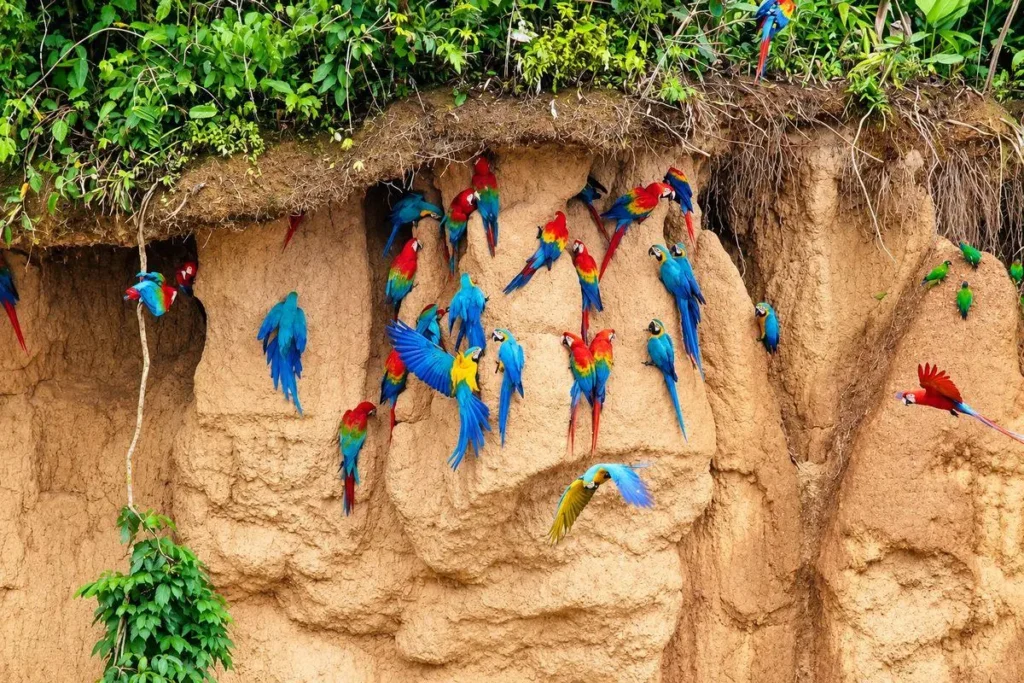
Macaws are most active at Tambopata’s clay licks from September to January, and least active from April to June, according to long-term research at the Tambopata Research Center. The peak coincides with their breeding season and a change in diet. Parrots use the clay licks all year, and especially in the dry season.
This is where “dry or rainy” advice gets confusing. In the dry months you see the birds more clearly in the sun and the boat ride to the clay lick is rarely rained out. At the peak, in the wetter months, there are more macaws, but you trade some certainty about the weather.
Our pick: if macaws are the main reason for your trip, go between September and November. Activity is at or near its peak and the heaviest rain, December to February, hasn’t started yet. Two of our trips include a clay lick: Macaws & Wildlife (El Gato, all year) and the Amazon Expedition (El Chuncho, April to November).
What is friaje, and when does it hit Tambopata?
Friaje is a cold front from the south that can reach Tambopata between May and September and keeps temperatures low for several days. On June 14, 2022, Senamhi recorded 10.5 °C in Puerto Maldonado, against a normal minimum of 18.3 °C for that station.
For your trip, it means two things. Pack a fleece and a light rain jacket even for the jungle, and expect a couple of cold, drizzly days if a front comes through. It isn’t the hot, humid Amazon most people picture.
What will 2027 look like with El Niño?
For January to March 2027, Peru’s official forecasts expect normal to below-normal rain in the Amazon, while the coast gets more rain than normal because of El Niño. Senamhi’s seasonal outlook, updated in August 2026, pointed to normal or below-normal rain for the Amazon, and ENFEN’s late-October update kept the same trend for the central and southern Amazon. Both are updated regularly, so read them as a trend, not a promise.
In practice, the heavy El Niño rain in 2027 is a coastal story, not a Tambopata one. If you are combining the Amazon with Lima or Paracas, our Peru in December guide covers what El Niño means for the coast. For Tambopata, plan as you would in any rainy season.
Which Tambopata trip fits your month?
All three of our Tambopata trips start and end at Puerto Maldonado airport and stay at our partner lodge on the Tambopata River, about 45 km upriver by boat. Two run all year; the camping trip runs April to November only.
| Trip | Runs | Best for |
|---|---|---|
| Amazon Escape, 3 days, from USD 597 | All year | Short on time, first Amazon visit |
| Macaws & Wildlife, 4 days, from USD 921 | All year | A clay lick without camping; our rainy-season pick |
| Amazon Expedition, 4 days, from USD 1,128 | April to November | A night camping next to El Chuncho clay lick |
Prices are per person, 2 sharing a Superior cabin. Transfers are shared with other lodge guests, and a private guide with excursions only for your group (with a Suite) can be quoted on request. The reserve entrance ticket (about USD 10, or about USD 20 on the Expedition) is paid on site. Flights to Puerto Maldonado are not included; we can book them as part of your trip.
Not sure which one? Send us your dates and we’ll tell you how that month looks before you decide.
How do you fit Tambopata into a Peru itinerary?
The easiest way is to fly from Cusco to Puerto Maldonado, about an hour, at the end of your days in the Andes. For the lodge transfer you need to land before 1:00 pm on day 1 and fly out after 12:30 pm on your last day.
Going after Cusco also helps with altitude: Puerto Maldonado sits about 200 m above sea level, so you finish the trip low, the order we recommend in our acclimatization guide. If you are building a longer trip, our 10-day Peru itinerary covers the Andes part, and our Peru trip cost guide shows what a full trip adds up to.
Tambopata or Manu: which one for your dates?
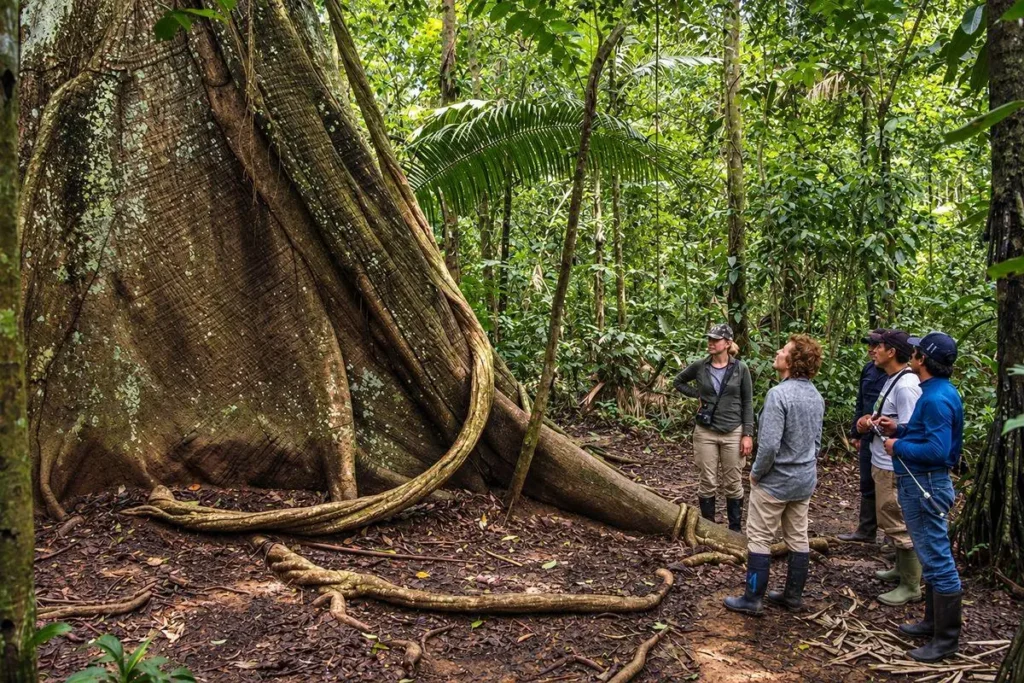
Tambopata is the better choice for a 3 or 4-day Amazon add-on: you fly in from Cusco in about an hour and are on the river the same day. Manu is reached by road from Cusco, around 7 hours to the start of the trip, so it suits longer trips and travelers who also want the cloud forest.
In the rainy season, Tambopata’s short access matters even more: one flight instead of a long mountain road. We only plan Tambopata, so if Manu fits your trip better, we’ll tell you.
Plan Your Tambopata Trip With Us
Tell us your dates and we’ll tell you honestly how that month looks in Tambopata, which of the three trips fits and how to connect it with Cusco and Machu Picchu. It’s free, with no commitment, and we reply the same day (Peru time). We can book your domestic flights inside Peru as part of the trip; international flights you book yourself.
FAQ
Is it worth visiting Tambopata in the rainy season?
Yes, if you plan for it. Rain usually falls in the afternoon, the forest is fruiting and there are fewer visitors. Choose a 4-day trip so a lost afternoon doesn’t matter.
What is the rainiest month in Tambopata?
January, with about 345 mm of rain and 18 rainy days on average in Puerto Maldonado, followed closely by February.
When is the best time to see macaws in Tambopata?
From September to January, when research at the Tambopata Research Center found clay lick activity is highest. It is lowest from April to June.
Does it get cold in Tambopata?
Sometimes. Between May and September, cold fronts called friaje can bring nights of 10 to 12 °C. Senamhi recorded 10.5 °C in Puerto Maldonado on June 14, 2022.
What is the best time to visit the Peruvian Amazon?
In the southern Amazon, around Tambopata and Puerto Maldonado, the driest months are May to October and the wettest are December to February. Iquitos, in the north, follows its own river seasons, so plan it separately.
How many days do you need in Tambopata?
Three days is enough for a first look. Four days adds a clay lick and leaves a buffer if rain cancels an activity.